NASA Explorer
Ask questions about NASA space-biology research and get answers backed by published sources. I built the NestJS chat and RAG backend, a Python ingestion pipeline, and parts of the interactive React knowledge graph.
Team of 6 • 1st Place — NASA Space Apps Challenge 2025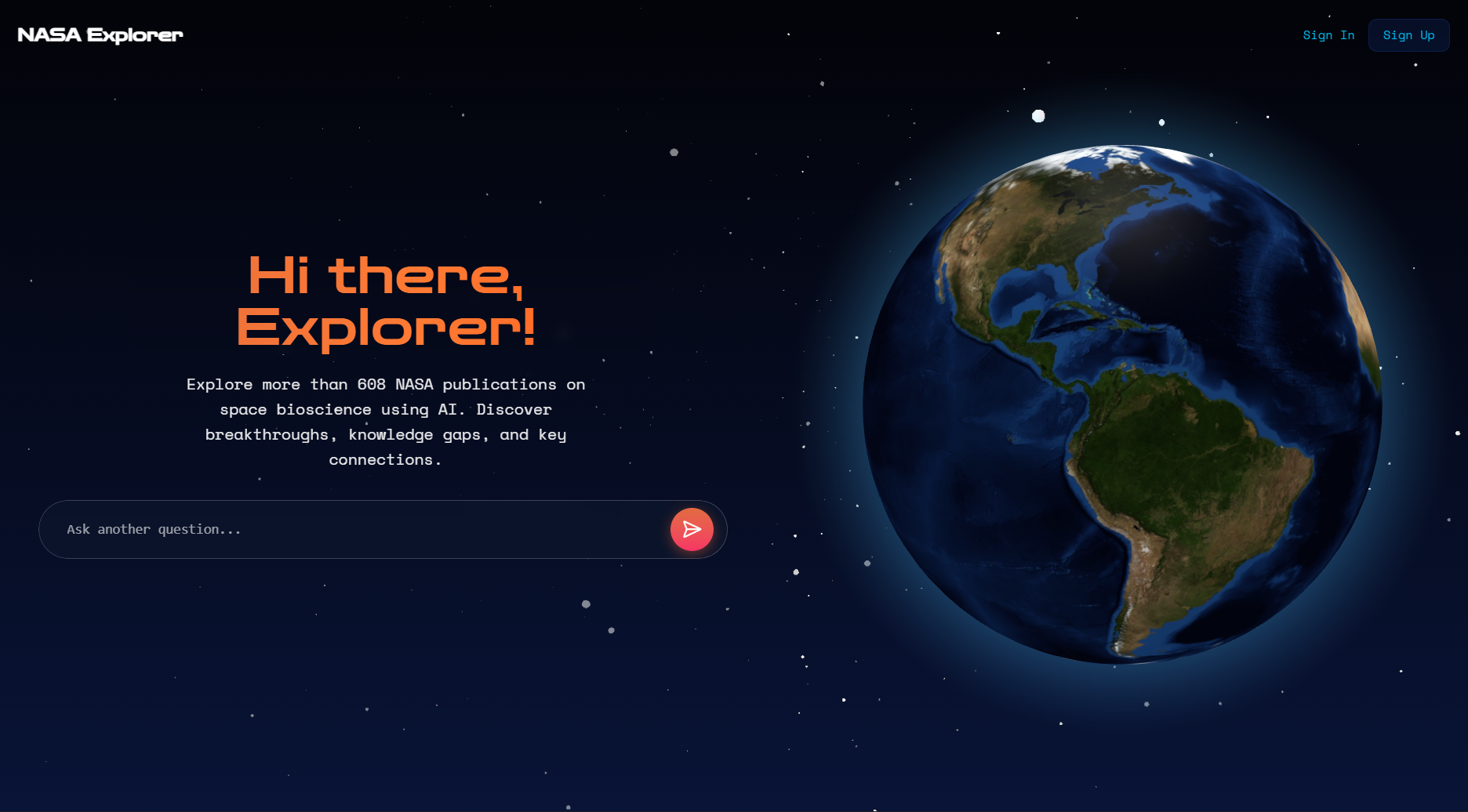
The Problem
NASA has published decades of space biology research, but it's scattered across databases, PDFs, and institutional repositories. Scientists spend hours searching through papers instead of asking questions and getting answers. Our team entered NASA Space Apps 2025 to solve this.
How It Works
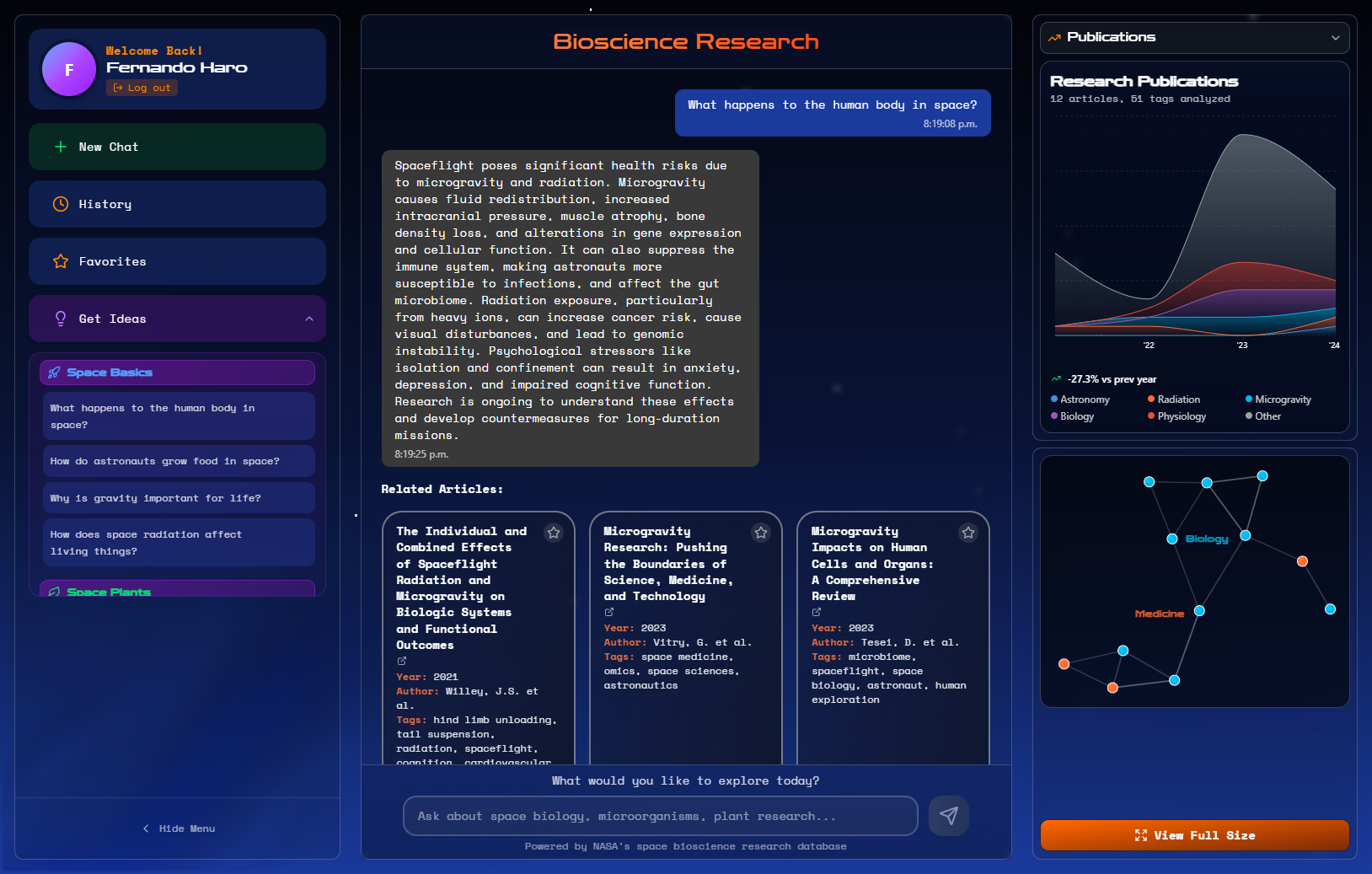
- 1 You type a question about space biology in plain English: 'How does microgravity affect bone density in mice?' or 'What experiments have studied plant growth on the ISS?'
- 2 The backend searches a RAG corpus built from NASA Task Book, OSDR, and PubMed Central articles, verified scientific sources, not random web content.
- 3 Google Gemini 2.5 Flash Lite synthesizes an answer with inline citations. Each response includes a list of referenced articles with titles, authors, years, and DOI links.
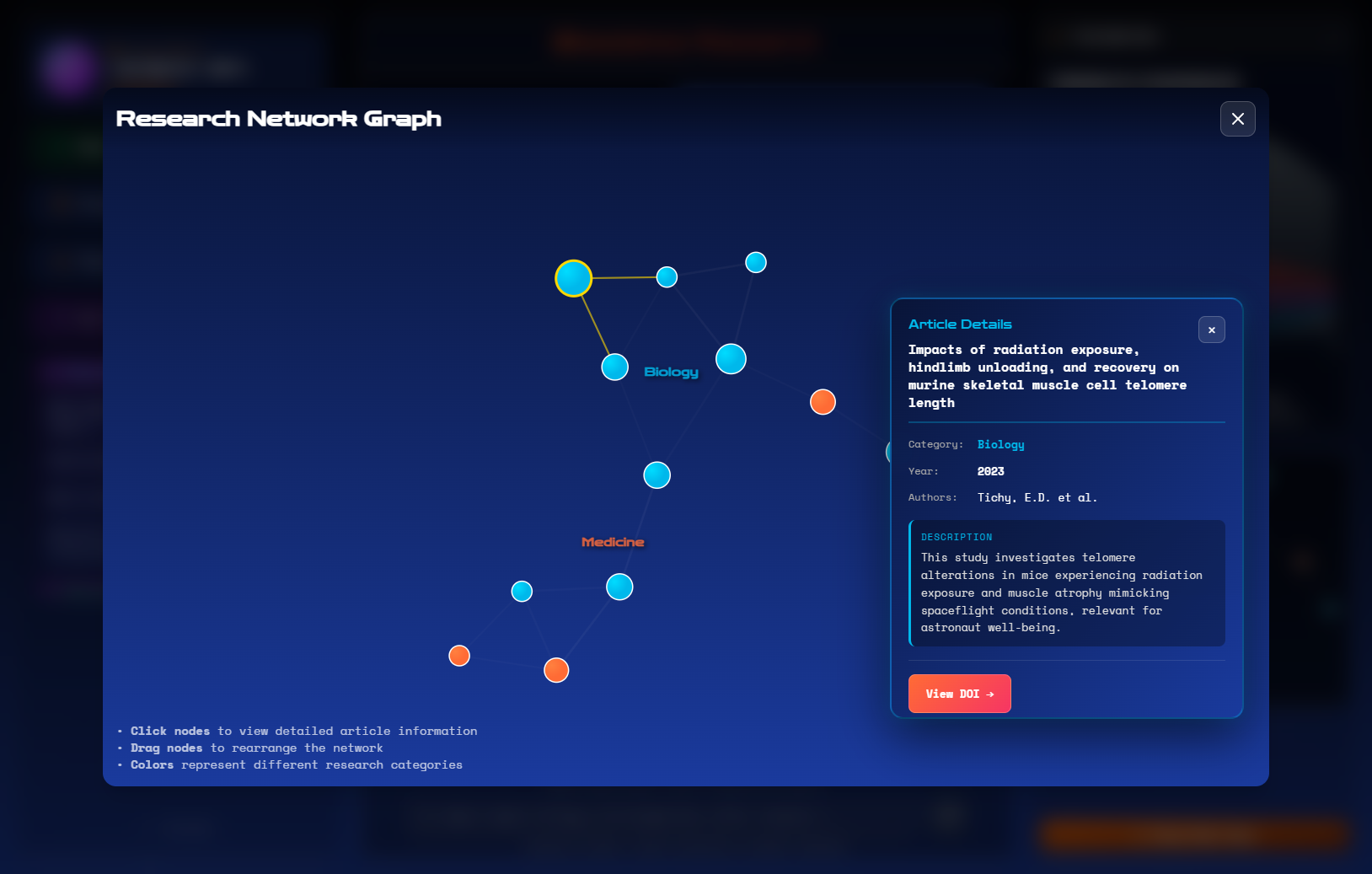
- 4 An interactive D3.js knowledge graph in the sidebar shows how research topics connect, letting you explore related areas by clicking nodes.
- 5 You can save articles to favorites, revisit past conversations, and explore pre-built prompt suggestions organized by topic.
What I Built
Built the NestJS backend: chat module with conversation persistence, user auth with JWT, favorites system, and the RAG orchestration layer connecting to Vertex AI and the Google Cloud RAG corpus.
Developed the interactive knowledge graph with D3.js (force-directed layout, draggable nodes, hover highlighting), article favorites sidebar, and chat history integration on the React frontend.
Wrote the entire Python data pipeline that scraped and ingested NASA publications from multiple sources into the RAG corpus.
Results
Built in a weekend by a team of 6. Won 1st place in the local round of NASA Space Apps Challenge 2025 and was selected as a Global Nominee. The project was evaluated on technical implementation, scientific accuracy, and potential impact on NASA's open science mission.