Stilo
I led development of an app that builds outfits from your own clothes. I designed its AI recommendation pipeline and drag-and-drop canvas. In a 10-person study, AI-assisted outfit creation took 83.4% fewer UI interactions than the manual flow.
Co-Author & Lead Developer • Paper accepted at MexIHC 2026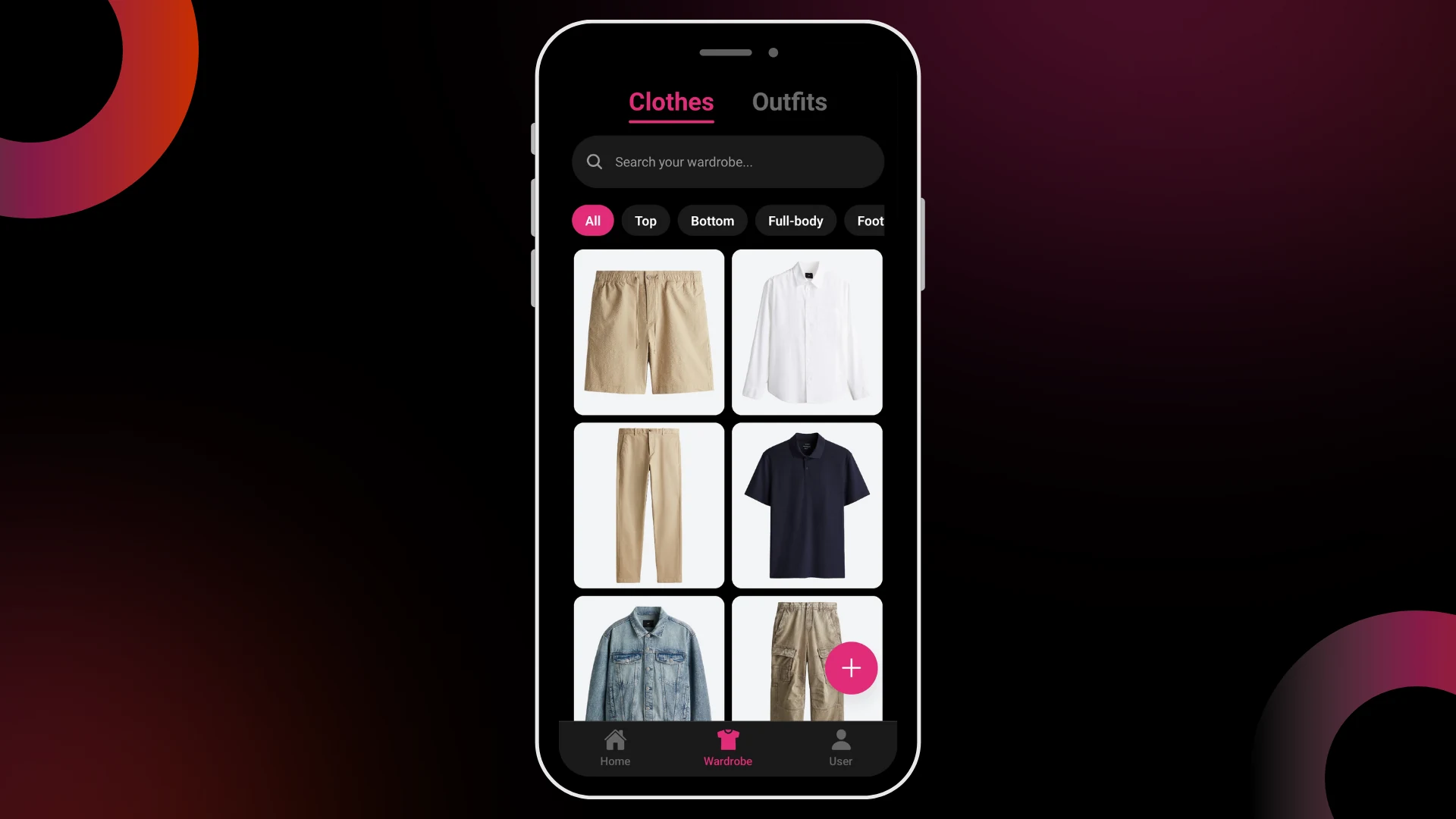
The Problem
Closet overabundance increases daily cognitive load and leads to chronic underutilization of personal inventory. People gravitate toward the same few outfits while most garments sit idle. Stilo was built to test whether an AI system could reduce the mental effort of choosing what to wear and improve wardrobe rotation.
How It Works
- 1 When you create your account, you fill out a style profile questionnaire and take a photo of your face. The app analyzes your facial colorimetry to find the color palettes that suit you best.
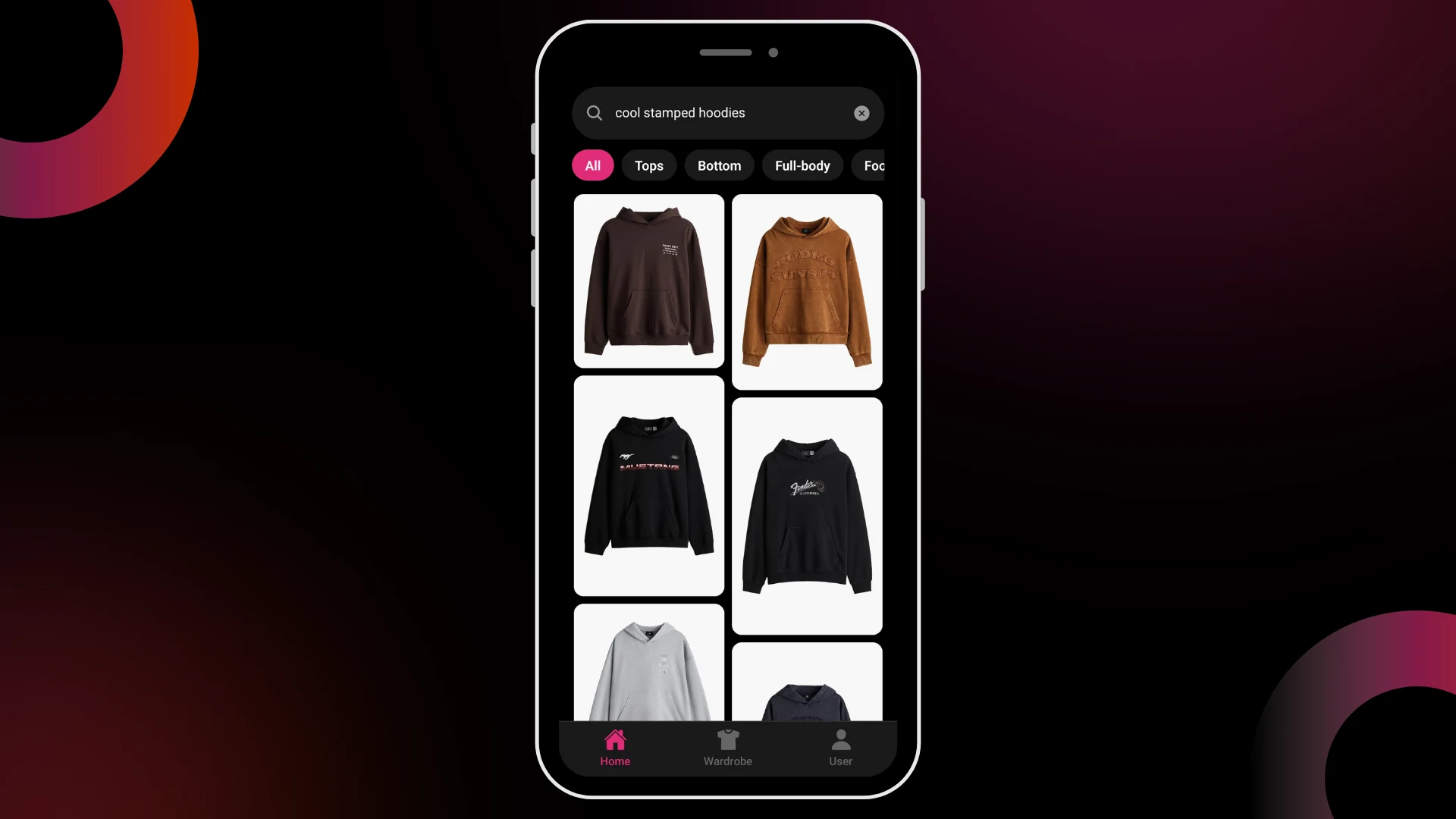
- 2 You upload photos of your clothes or browse items from partner stores. The app removes backgrounds and extracts dominant colors and tags from each piece.
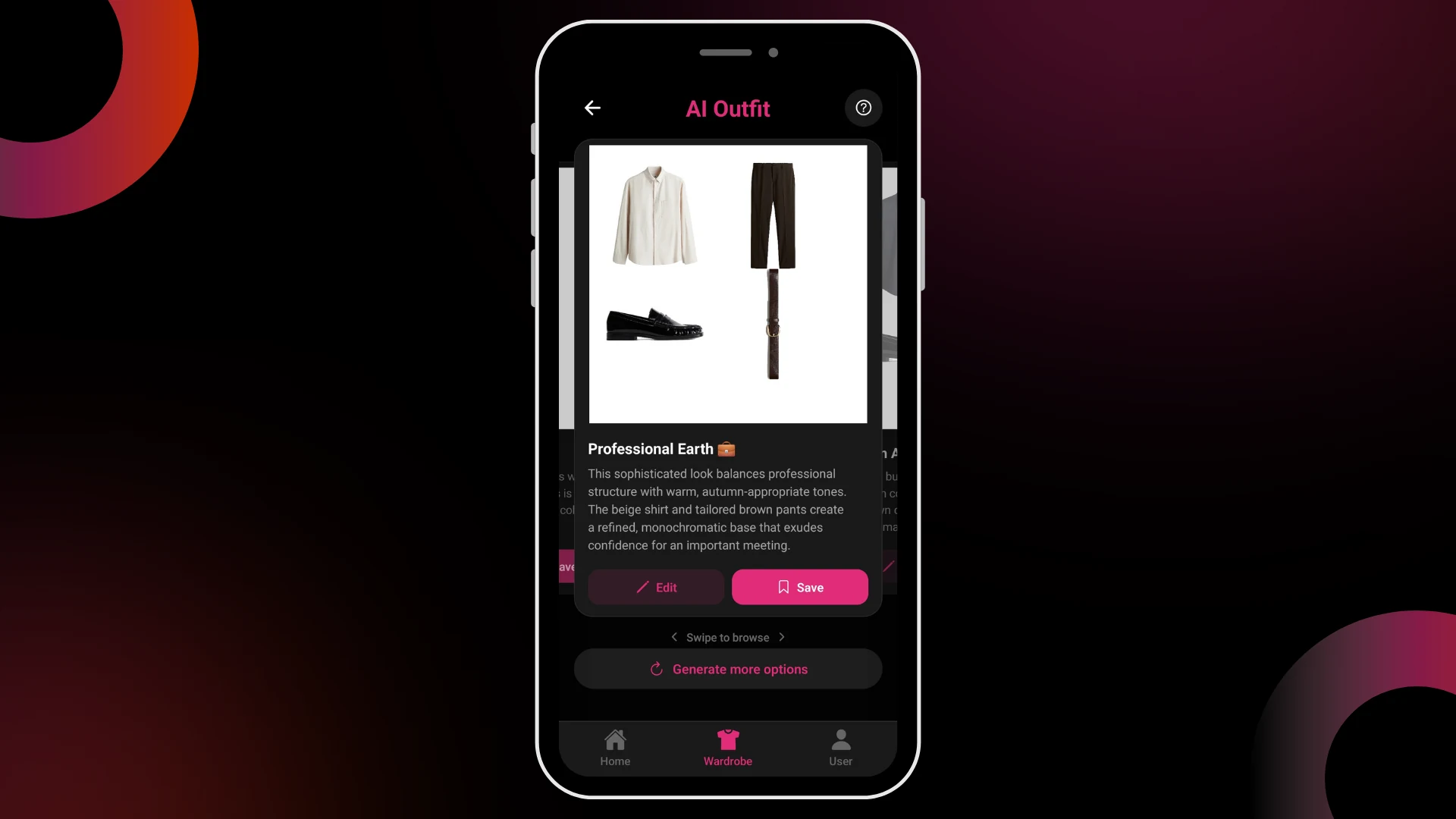
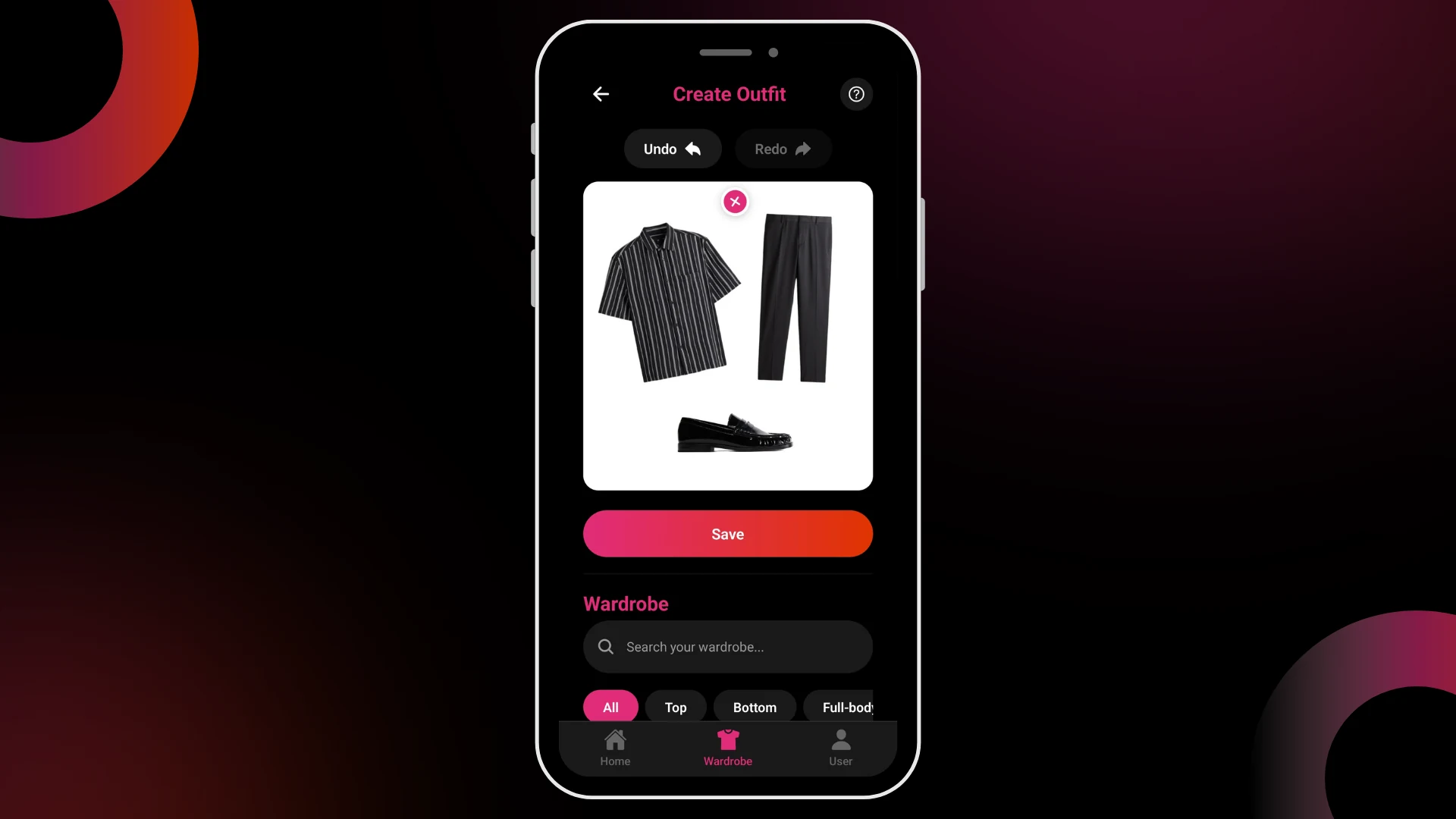
- 3 You can assemble outfits manually on the interactive canvas, or describe the occasion in plain language and let the RAG pipeline generate coordinated outfits that respect your color palette and style preferences.
- 4 You can iterate, 'make it more formal' or 'swap the jacket', and the system regenerates without starting over.
What I Built
Designed the three-phase RAG pipeline: a planning step where Gemini breaks prompts into clothing categories, a vector similarity search via pgvector to retrieve matching items from the wardrobe, and a composition step that assembles coherent outfits factoring in the user's color palette and style preferences.
Built the React Native mobile app with an interactive canvas for manually arranging outfits, drag, scale, rotate, plus the wardrobe and recommendation flows.
Provisioned all cloud infrastructure on Azure using Terraform.
Results
A controlled experiment with 10 participants compared manual vs. AI-assisted outfit creation using a standardized 25-item capsule wardrobe. The AI condition reduced UI interactions by 83.4% (p = 0.001), lowered cognitive load by 22.3% (NASA-TLX), and scored 86.75/100 on the System Usability Scale. The study was accepted for publication at MexIHC 2026.